Wednesday, July 19, 2006

Push that button baby

As a business psychologist, I get to observe a lot of managers in action. In one organisation I've come across, the Chairman is a self-made man who has grown his business over two decades of hard work and determination. But ideas from his team often fail to impress him – even when they clearly have merit for the business. The canny employees who succeed in driving projects through and reaping the career rewards realise that business benefit is only secondary; in order to succeed, proposals have to fan the flames of the Chairman’s ego. Business benefit without much fan waving is always doomed to failure.

Most people have a secret hot button of some sort. For the Chairman it is flattery. Even though many business people appear to be motivated by money, the truth is they often chase money as a proxy for something else - recognition, security, fear of failure, or a need for control over their lives.

People rarely talk about their darkest, innermost needs. Many people aren't even aware of them. But if you can figure out what it is that people secretly desire, then learning to influence and persuade them will be as easy as pushing a button on a remote control.


Monday, July 17, 2006

Bosses: The devil can wear cheap shoes too

Satirical movie The Devil Wears Prada (starring the fabulous Meryl Streep) is getting a lot of column inches for exemplifying a nightmarish boss. But most bosses don't set out to be nightmarish - they're just plain incompetent or oblivious!

With three simple questions though, you can make your working life a whole lot easier by managing the upward relationship with your boss:

1. How does your boss like to receive and process information? Written report or face-to-face meeting? Most people tend to favour one mode over another. And don’t forget to think about how frequently your boss needs to hear from you. For some, once a week may be plenty while others may feel by contact once a day. When we get busy, our natural human tendency is to fall back on ways of communicating that suit us. But in managing your boss effectively, the key is to communicate in ways that suit them.

2. What is their decision-making style? Some bosses assign responsibility but need to feel heavily involved and consulted when it comes to actual decisions. Other bosses delegate to such an extent that they hate to be bothered by what they see as the detail, effectively dumping work.

3. What is your boss’s openness to feedback? Certain older-school bosses tend not to take kindly to questioning or criticism. However, younger managers may expect you to question their assumptions, quiz them over data, and explore alternatives with them as part and parcel of your membership of their team.

Of course, you could hide your head in the sand and hope your boss goes away. But that ain't going to work. It's a fact that politically savyy people agree on.

Written down, these questions could seem simplistic. But they are only simplistic if you have already discovered your boss’s preferences in these areas. Anyway, if you want to read more about it, I wrote an article on the topic for business magazine Accountancy.

Friday, July 14, 2006

Sorry: Office politics and the power of apology

Despite the possibility that Zinedine Zidane's head butt may have lost France the World Cup, it seems that his country is ready to forgive him. And all because he said sorry.

For me, too few people back down. Of course for important decisions, you need to stand your ground and argue for your rights. But for other, less important decisions, learn to back down. Even if you are clearly in the right and the other person is in the wrong. Even if you have written confirmation, sworn witnesses and signed affidavits. Because while it may be satisfying to be proved right, consider which is more important to you - proving a point and creating an enemy or backing down and retaining a relationship?

We all hate to back down or lose face. But be prepared to do it. Because success in business depends more on relationships rather than righteousness. Be ready to concede. And do it graciously and wholeheartedly, not grudgingly between gritted teeth.

Swallow your pride because politically savvy people realise it's more important to retain long-term relationships than to be proved right. After all, have you ever heard anyone comment: 'He's unsuccessful but, hey, at least he's still got his pride?'

Thursday, July 13, 2006

The Rules of Entrepreneurship: Want to get quoted in a book?

Well I'm very excited today because this morning I just signed a new book deal with publisher Cyan/Marshall Cavendish.

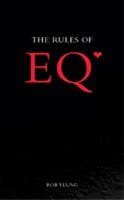
They have asked me to write The Rules of Entrepreneurship and it'll be my fifth book with them (and my 14th book in total). My other books with Cyan/Marshall Cavendish include The Rules of EQ and The Rules of Networking.

They asked me to write the book because I do a lot of coaching with entrepreneurs on setting up and running their own businesses.

Anyway, I'll be working on the book between now and the end of the year. And I'll be looking for hints and tips, learnings and lessons to include in the book too. So if you are an entrepreneur, a freelance worker or an independent consultant and want to be quoted in a book (or know one and think they might want to get some free publicity), then please leave a comment with your details!

Wednesday, July 12, 2006

Life coaching: Throwing money (plus your life and career) down the toilet

I caught a couple of minutes of some reality show the other night - the presenters were asking the supposedly 'expert' opinions of someone calling themselves a life coach.

HA! I thought. Because anyone can call themselves a life coach.

Too many alleged life coaches are quacks. Life coaching is an unregulated field, which means that anyone can set up in business as one. Anyone can advertise in the classifieds of a magazine or set up a glossy website and offer their services - even a college dropout or a convicted criminal.

There are some talented and credible life coaches. But make sure you check their qualifications. A psychologist should be a member of the British Psychological Society (BPS) or the American Psychological Association (APA). Another mark of quality is registration with the British Association for Counselling and Psychotherapy (BACP).

So don't be afraid to ask about a life coach's qualifications. And then don't take them at their word. Look their professional body up on the internet and check that they really are a member.

Either that or risk being coached by a fraud. Simple as that.

Tuesday, July 11, 2006

CVs and resumes: Tailoring for your job hunt

Last week I was coaching a job hunter who was failing to get interviews. The first thing I asked him was: 'Do you tailor your CV to every job you apply for?'

He said no, he only had time to tailor his covering letter.

But I'm afraid it's not good enough. Because the CV you send to one organisation should have little in common with the one you send to the next.

Because the key, key rule of writing a good CV is to ensure that it tells the reader exactly what they want to hear. Recruiters and headhunters may spend as little as a minute glancing at each CV. So your CV must mention all of the key phrases they use in their job advert.

If they ask for 'change leadership skills', then damn well use that precise phrase twice in the top half of the first page of your CV. Don’t think that it is implicit that you have change leadership skills simply because you say that you have 'ten years of management experience'. If another job talks about 'communicating complex information', then use that exact phrase rather than 'good communication skills'.

You might think a recruiter would be able to read between the lines. But CVs are often sifted by inexperienced recruitment minions who can't judge the difference between a good or bad candidate. So they may have been specifically instructed to look for certain key words and phrases – and to bin CVs that do not contain them.

So tailor each and every CV or resume. Your life may not depend on it - but your career does.